
Across the news: pi-labs in action
See how pi-labs is shaping the future of AI forensics and intelligence analysis.

pi-labs, an Indian AI company focused on regional security operations and digital governance, has announced a strategic collaboration with Google Cloud to accelerate the delivery of secure, scalable, and mission-ready AI solutions for India — combining Google’s on-premise Distributed Cloud infrastructure with pi-labs’ indigenous AI capabilities for public sector and government institutions.

pi-labs has been recognised in the Gartner® Emerging Market Quadrant for Deepfake Detection – Startup Vendors (June 2026), earning a position in the Specialists quadrant and becoming the only Indian company featured in the report. The recognition highlights pi-labs’ advancements in AI-powered deepfake detection, forensic accuracy, explainable AI, and sovereign deployment capabilities designed for law enforcement, defence, and public sector organisations. This milestone reinforces the company’s commitment to building trusted, mission-ready AI solutions that strengthen digital evidence integrity and national security.

The Economic Times features insights from Ankush Tiwari, Founder & CEO of pi-labs, on the growing importance of data infrastructure and AI readiness as organisations accelerate AI adoption, and the operational challenges enterprises face in closing that readiness gap.
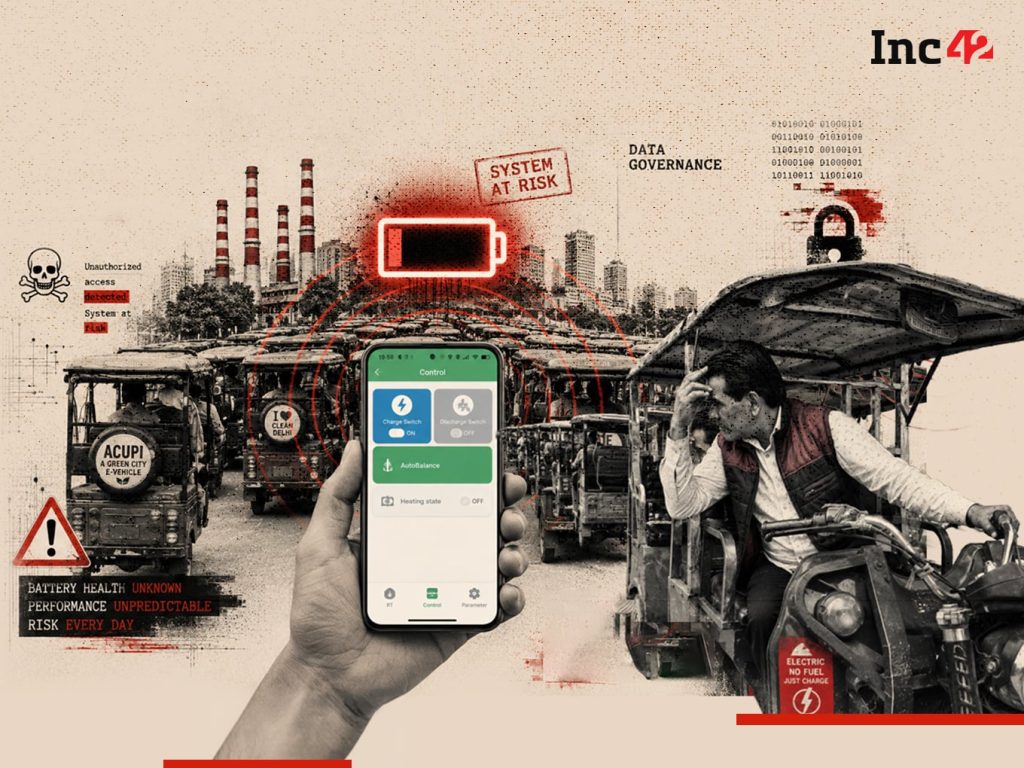
Inc42’s investigation into weak battery-management-system security behind a wave of remote e-rickshaw shutdowns features pi-labs Founder & CEO Ankush Tiwari, who traces the vulnerability to OEMs skipping access controls on BMS firmware and calls for a certification standard for BMS units in India, similar to telecom type-approval requirements.
Inc42’s look at MeitY’s pushback on WhatsApp’s phased username rollout features Ankush Tiwari, Founder & CEO of pi-labs, on how WhatsApp’s chat-plus-payment layer closes the entire fraud loop — trust-building, pitch, and payment — inside one app, making it the platform with the highest cybercrime complaint volume among messaging apps.
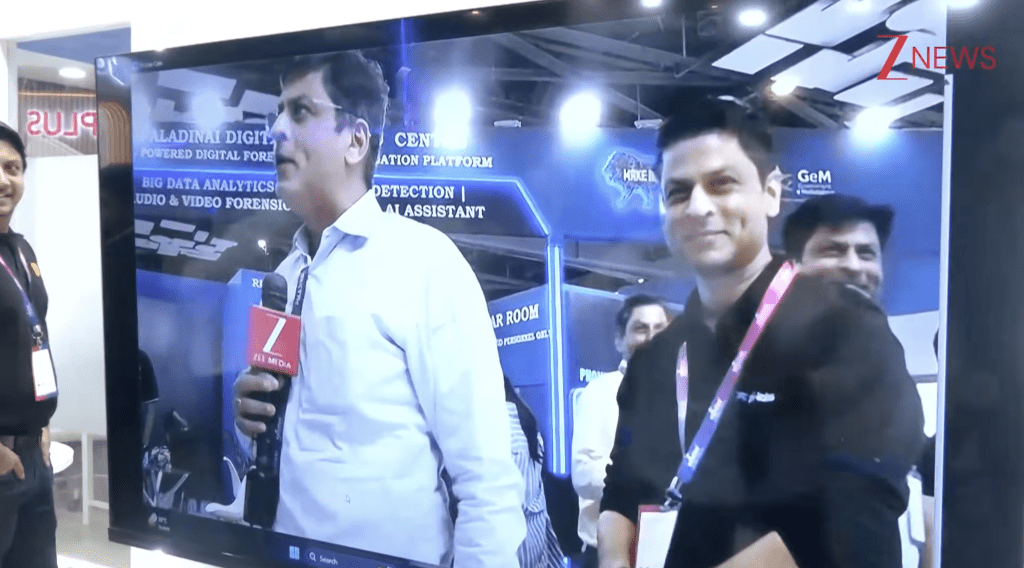
pi-labs was featured on Zee News during Police Expo 2026, one of India’s premier platforms for policing, homeland security, and surveillance technologies. The coverage showcased pi-labs’ AI-powered security and cyber forensics solutions, highlighting its innovations in digital investigations, public safety, and mission-critical AI. The national television feature significantly strengthens pi-labs’ visibility among law enforcement agencies, government officials, industry leaders, and the broader public, reinforcing its position as a trusted innovator in AI-driven security technologies.
An authored piece by Ankush Tiwari, Founder & CEO of pi-labs, argues that sovereign AI must rest on three pillars — data sovereignty, model sovereignty, and infrastructure sovereignty — drawing on India’s CIBMS border-surveillance upgrade and international examples to show why dependence on foreign AI models creates strategic vulnerability for adopting nations.

pi‑labs implemented Dell Technologies OEM Solutions
infrastructure, deploying Dell AI servers and
GPU‑accelerated systems within secure, fully
on‑premises environments to power its forensic‑grade AI
platform. This implementation provides the foundation
needed to address the growing complexity of digital
crime in an AI‑first world.
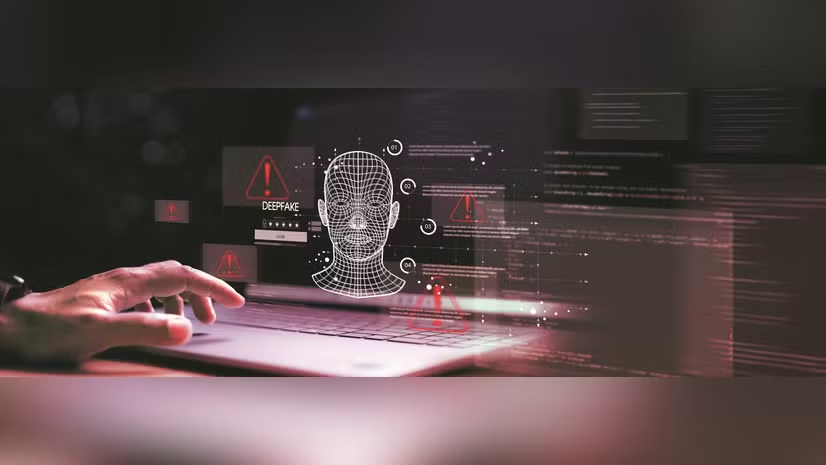
A report by technology firm pi-labs, published in early 2026, has sounded a warning over a “digital deception epidemic” in India. The study reveals a 900 per cent surge in deepfake content in recent years. It highlights a staggering gender disparity, finding that more than 90 per cent of explicit deepfakes circulating online target women. This misuse of generative AI is increasingly used for non-consensual sexual imagery, image morphing and identity manipulation. In India, the crisis is reflected in government data, with cybercrime complaints involving women jumping from roughly 50,000 in 2024 to nearly 80,000 by 2026 — a 60 per cent increase in two years.
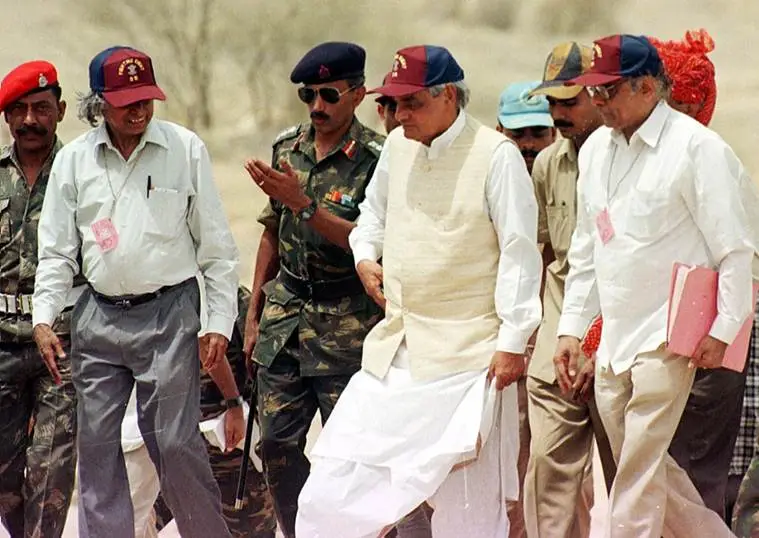
A National Technology Day feature gathering perspectives from 30+ Indian technology leaders includes Ankush Tiwari, Founder & CEO of pi-labs, on AI as a force multiplier in defence — covering the shift to predictive, intelligence-led security, the rise of smaller sovereign AI models for specific operational contexts, and the growing importance of deepfake and misinformation detection for national security.
Anukush Tiwari, CEO and Founder of pi-labs, said,“Artificial Intelligence is rapidly emerging as a force multiplier in defence operations, transforming how modern security ecosystems operate and respond to evolving threats. The sector is witnessing a major shift from reactive defence mechanisms to predictive and intelligence-led security frameworks powered by AI and advanced analytics.
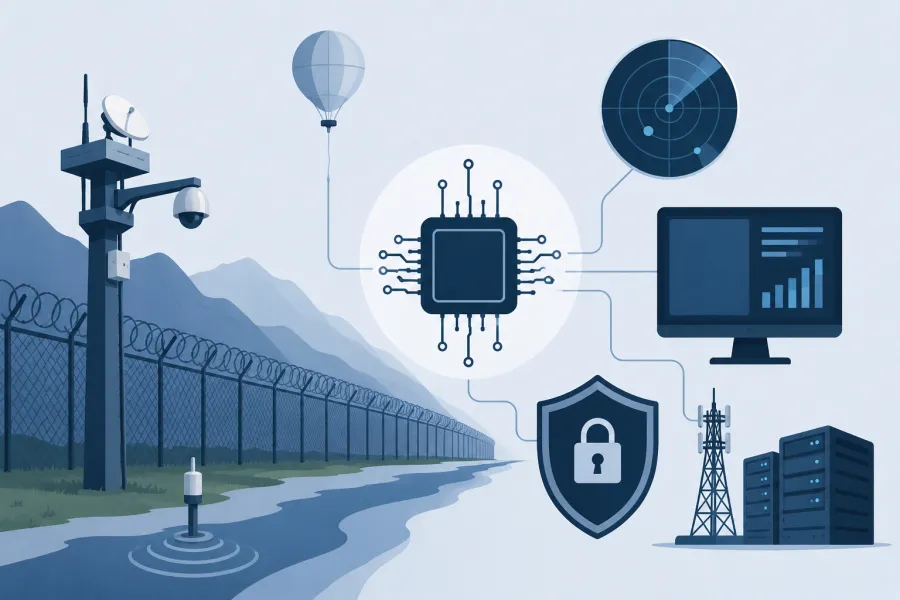
An authored article exploring the growing importance of sovereign AI in strengthening India’s national security, technological self-reliance, and digital sovereignty. Note: BusinessWorld is currently using an older photograph of Ankush Tiwari pending an update.

pi-labs, a leading Indian deep-tech company with expertise in cyber forensics, cybersecurity, and intelligence, is highlighted in Outlook Business for its deepfake intelligence data, drawing attention to the rapid growth and risks of AI-generated content.
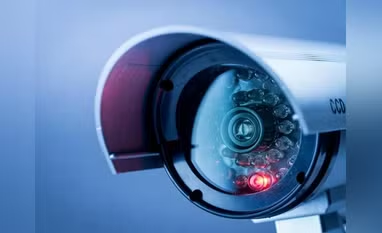
“Globally, we’ve seen cases like Iran, where poorly secured traffic cameras left with default credentials and known vulnerabilities were silently accessed over years, allowing adversaries to monitor and extract footage without detection. Many low-cost cameras come from opaque supply chains with limited security oversight,” he said.
This problem of CCTV and other surveillance gear being prone to cyber attacks has been exposed further in the recent case of traffic cameras in Iran being hacked by Israel, pointed out Ankush Tiwari, founder and chief executive officer of pi-labs.
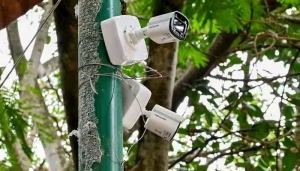
Ankush Tiwari CEO and Founder of pi-labs, said that recent incidents teach a clear lesson that security must be built upstream. “Organizations must know exactly where their hardware is sourced from and which cloud providers handle their data because weak links in either can lead to compromise
To counter this, pi-labs has developed pi-authentify, an AI-driven detection system that scans digital content for markers left behind by generative tools and produces an authenticity score. The technology was used in the investigation of the Payal gaming case, where frame-level forensic analysis helped identify synthetic elements and accelerate the probe.
Another platform, NaMoKavach, enables users to submit suspicious media through a secure portal and receive a confidential verification assessment within two working days.

Anukush Tiwari, CEO and Founder of pi-labs, said, “AI is one of the most powerful technologies of our time, but like every powerful tool, it reflects the intent of those who use it. We are witnessing a growing trust deficit in digital spaces, where identity can be manipulated within minutes and reputations can be damaged overnight. Our focus is not only on detecting synthetic media but also on restoring confidence and control. People deserve to feel safe in their own digital presence.
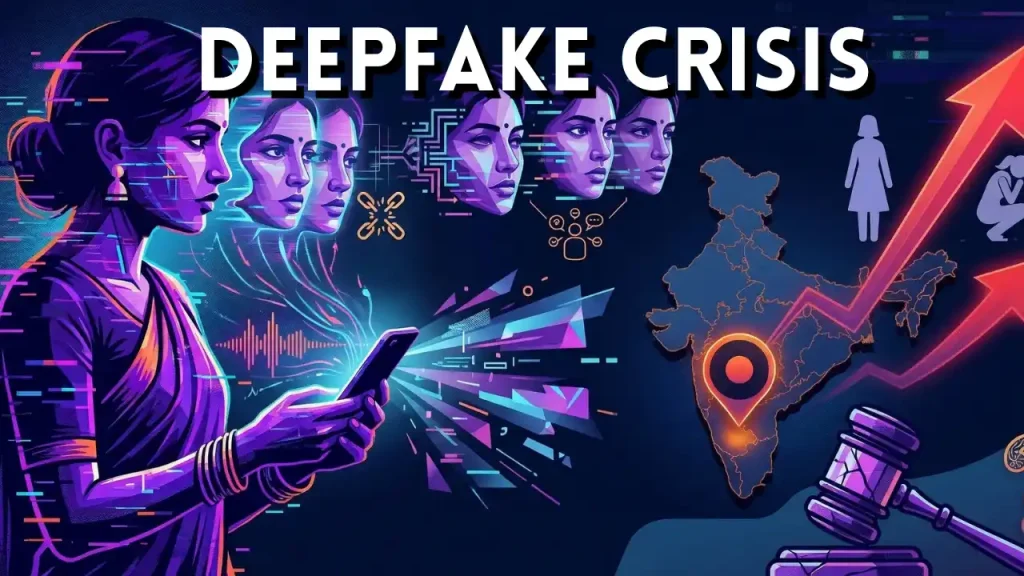
Two years on, the numbers tell a damning story. A new report by AI safety firm pi-labs reveals that 93% of deepfake victims globally are women, with a massive 900% rise in non-consensual synthetic content targeting them in recent years. In India, cybercrime complaints involving women have jumped from roughly 50,000 in 2024 to nearly 80,000 by 2026, a 60% hike in just two years.
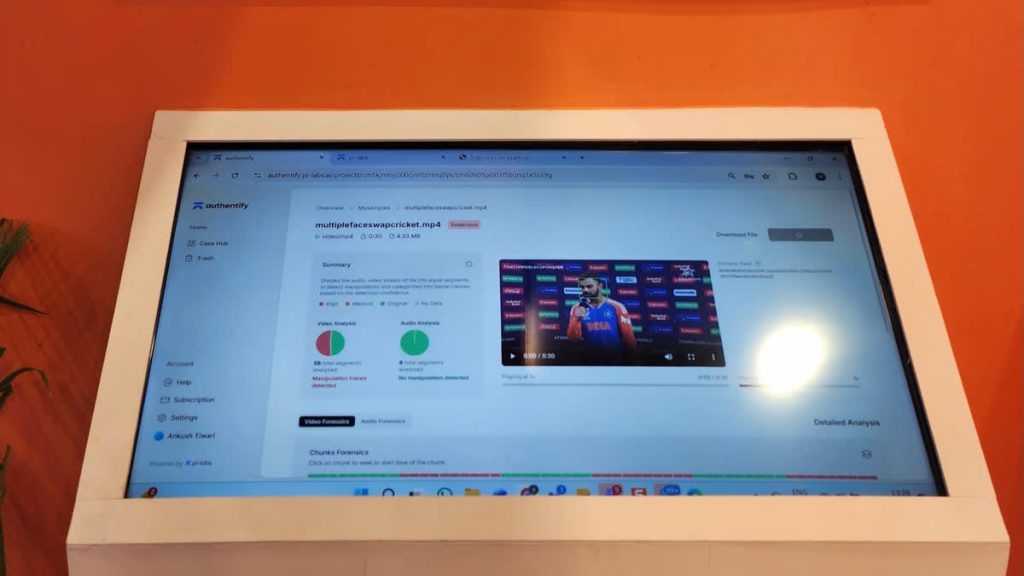
Ankush Tiwari, Founder and CEO of pi-labs, asserted that deepfakes are no longer experimental; they are scalable, inexpensive, and highly convincing.
In a conversation with ETV Bharat, Tiwari called deepfakes a serious cross-sector threat and said, “Today, these technologies are exploited not only for political misinformation and election interference but also for financial fraud through voice cloning, executive impersonation, and enterprise-level social engineering attacks.
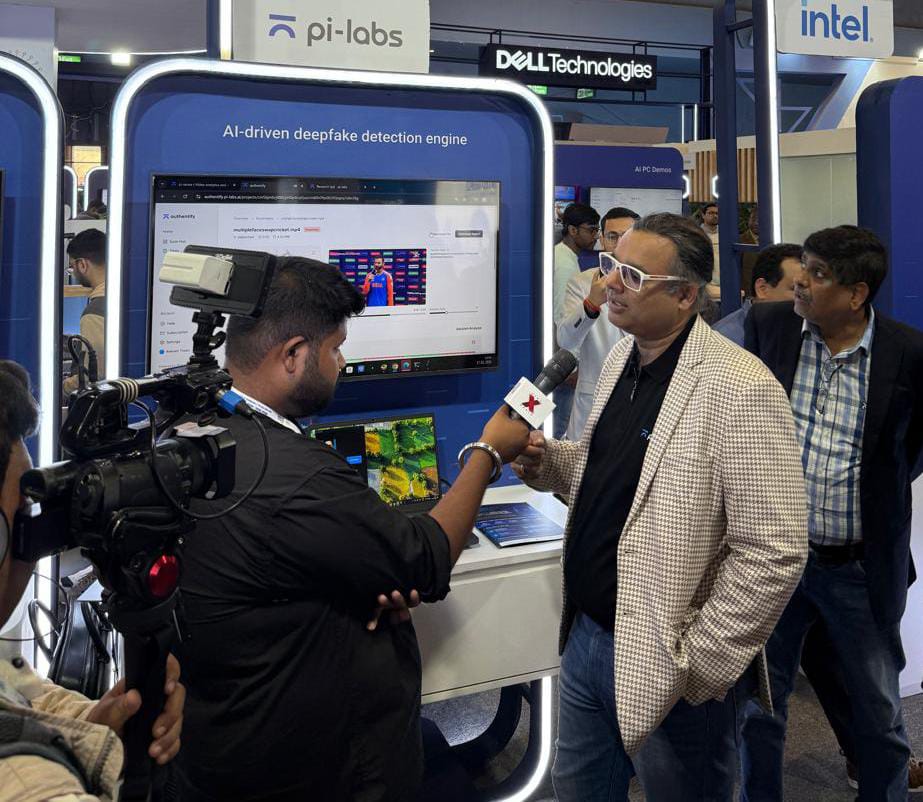
Ankush Tiwari, CEO & Co-Founder of pi-labs, on NewsX The segment focused on the growing threat of deepfakes and the rising need for stronger verification and digital trust frameworks.
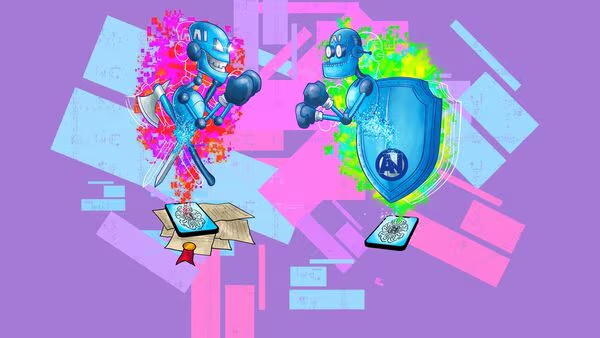
Ankush Tiwari, founder of pi-labs, which develops deepfake detection and forensic AI tools,
describes GenAI as a tool that exposes weak points in identity-driven systems.
“Whenever a new disruptive technology comes into software, it exposes new threat vectors,” he
said, noting that in the early days of generative AI, most attention was on productivity gains, not
on potential misuse. pi-labs focuses on deepfake detection by analysing images, audio and
video for synthetic manipulation.

Ankush Tiwari, CEO & Co-Founder of pi-labs, stated that Amid rising geopolitical and security challenges, the defence and internal security sector seeks an execution-focused Budget 2026 with multi-year capital allocations for indigenous AI-led intelligence systems, cyber defence platforms, robotics, quantum-safe communications, and secure software. These technologies are core operational infrastructure and should be funded like physical defence assets.

Ankush Tiwari, CEO & Co-Founder of pi-labs, highlights this as the single most transformative theme:
“The macro-level theme that I expect Finance Minister to bless the economy with is a budget that comprehensively moves India from a service-oriented economy to product-focused economy. Unless Indian economy moves from a service-provider mode to product developer mode, India won’t create indigenous design, IP ownership and deployment-ready sovereign security solutions.”

Ankush Tiwari, CEO & Co-Founder of pi-labs, stated that the defence and internal security ecosystem is seeking a more execution-focused fiscal push amid rising geopolitical and security challenges.
“From this Budget, the industry expects multi-year capital allocations that enable not just development, but scaled deployment of indigenous AI-led intelligence systems, cyber defence platforms, robotics, quantum-safe communications and secure software stacks across defence and law enforcement “.

Ankush Tiwari, CEO & Co-Founder of pi-labs:Amid rising geopolitical and security challenges, the defence and internal security ecosystem is looking for a more execution-focused fiscal push in this Budget. From this Budget, the industry expects multi-year capital allocations that enable not just development, but scaled deployment of indigenous AI-led intelligence systems, cyber defence platforms, robotics, quantum-safe communications, and secure software stacks across defence and law enforcement.

Advanced technologies are now core to national security preparedness. Industry expects predictable, long-term fiscal support.
“The defence and internal security ecosystem expects multi-year capital allocations for indigenous AI, cyber defence, robotics and secure communications. PLI-like incentives for sovereign security technologies can reduce import dependence and build mission-critical capabilities,” according to Ankush Tiwari, CEO & Co-Founder of pi-labs.

Ankush Tiwari, CEO & Co-Founder of pi-labs, Stated that “Multi-year capital allocations for AI-led defence systems, cybersecurity platforms, and robotics are essential. Incentive structures like PLI for sovereign security technologies could support long-term deployment.”

According to cybersecurity experts, the use of AI content and deepfake videos could lead to fraud, create political unrest, and even geopolitical tension.
“When used for the right purposes, AI tools can actually help people create content at scale at a lower cost. But in case of misuse, the stakes are high as the content can’t be traced back to its original creator in many instances,” said Ankush Tiwari, founder of pi-labs ai, a cyber forensics startup.

pi-labs, a leading Indian deep-tech company specialising in cyber forensics, cybersecurity, and intelligence, today announced that it has been selected as an official Specialist AI Partner by the Maharashtra Advanced Research and Vigilance for Enforcement of Reformed Laws (MARVEL). MARVEL is a Government of Maharashtra–owned entity mandated to design and deploy AI-driven solutions across state departments, including law enforcement.

Ankush Tiwari, Founder & CEO of pi-labs, said, in 2026, AI capital would shift from model-centric bets to platforms that unlock real economic value. “We expect strong investment momentum in AI middleware, infrastructure and security layers that enable accuracy, scalability and cost efficiency at enterprise scale,”.

Founded in 2023, pi-labs operates at this intersection. Its AI-powered cyber forensics platform is already deployed across Indian law enforcement, defence, and BFSI institutions, focusing on deepfake detection, AI model security, and forensic intelligence.
At the center of this effort is Ankush Tiwari, founder and CEO of pi-labs, a serial entrepreneur previously known for co-founding Mobiliya. Along with Abhijeet Zilpelwar, CTO, pi-labs, and Raghu Sesha Iyengar, Chief Scientist, pi-labs, the company is building what it calls an AI-native security stack for a world flooded with synthetic content.

Last week, the Indian government warned X to ensure its AI chatbot Grok does not generate or facilitate nudity or sexually explicit content, after alleging misuse to create obscene material involving women. MeitY directed X’s India compliance head to review Grok’s technical, procedural, and governance safeguards to prevent such content.
Instances like these ascertain that AI can create harmful deepfakes because guardrails can be bypassed or tricked. “AI models are open systems trained and fine-tuned on datasets, which can override the developer’s safety alignment and introduce new, harmful behaviours. Users constantly develop ‘jailbreak’ prompts that exploit semantic loopholes to trick the model into ignoring these restrictions,” Ankush Tiwari, CEO and Founder of pi-labs, said.

In the past few years, advances in Artificial intelligence have compounded the cybersecurity threats faced by organisations. Generative AI has made it easier for cybercriminals to initiate and launch cyber attacks at a far higher frequency than any conman. The capabilities of Gen AI tools to deepfake any individual by impersonating their real videos and cloning their voice are leading to a surge in digital identity theft. Digital arrests are rising as criminals deepfake law enforcement officers and legal authorities. Deepfake attacks on public personalities like politicians, celebrity actors and sportspersons are resulting in the maligning of their image.

By Abhijeet Zilpelwar, Co-Founder and CTO of pi-labs
For more than a decade, big data fusion platforms were projected as the ultimate solution for intelligence and investigative work. They promised unified dashboards, seamless data integration, and accelerated decision cycles. And for a while, they delivered. But as the digital ecosystem has rapidly expanded, the ground reality for law enforcement and intelligence agencies has fundamentally changed. Traditional big-data fusion systems are simply no longer enough.

Pune-based pi-labs chief executive Ankush Tiwari said tests of the app have so far shown no requests for sensitive permissions such as location, contacts or photos. A DPDP violation, according to Tiwari, can only occur if personal data is collected without consent and then used or shared beyond its stated purpose. Such behaviour has not been observed.
In his view, mandatory pre-installation does not currently translate into a loss of user control because the app relies primarily on device identifiers like IMEI for fraud workflows and is not collecting ongoing usage data.

Even if Australia’s ban survives the courtroom, the next challenge is pratical; how do you stop tech-savy teenagers from posting as adults?
Ankush Tiwari, CEO of pi-labs, which safeguard business communications and high-value transactions says enforcement will make or break the law. Some platform are moving fast. Snapchat has begun age-verifying users via ConnectID, which links to bank-verified details and offer yes/no age confirmation without exposing personal data.

In the absence of AI-specific data protection laws, privacy experts observe that consumers remain vulnerable to potential misuse until upcoming regulations seek to mandate secure storage and processing of sensitive personal data within India

The recent legal petition filed by Aishwarya Rai and Abhishek Bachchan regarding morphed AI images and videos, where they are seeking protection of their personality rights.

According to a 2024 pi-labs report, deepfake cases in India have risen by 550% since 2019, with potential losses of over ₹70,000 crore this year alone. A McAfee study also revealed that 75% of Indians have come across deepfake content, with most of it targeting public figures and women.

Recently, an individual used an AI-generated voice to impersonate US Secretary of State Marco Rubio to contact three foreign ministers and two US officials. Similar instances have also been reported in India, with many deepfake videos of celebrities and politicians, including Prime Minister Narendra Modi, circulating widely.

Deccan Chronicle : DC covered an article by pi-labs on AI deepfakes targeting prominent figures like Rashmika Mandanna, Alia Bhatt, and Sachin Tendulkar, highlighting a significant rise in digital deception.

The Statesman : Ankush Tiwari, Founder & CEO of pi-labs, spoke about holding AI to the leash, how are we as humans responsible and our responsibility with the rise of AI.

HANS India : HANS India covers how India must build an Atmanirbhar digital ecosystem to safeguard its sovereignty and reduce risks from foreign-controlled digital infrastructure.

ET Edge Insights : ET Edge Insights discusses and covers the report published by pi-labs on “Digital Deception Epidemic: 2024 Report on Deepfake Fraud’s Toll on India”

LinkedIn News India : Linkedin News India talks about how deepfake is the growing menace and the need to innovative solutions and regulatory collaborations in 2025

The OupostAI : Ankush Tiwari, Founder & CEO, pi-labs, explains how we are building Authentify, the AI++ engine trained on datasets to detect synthetic content accurately

CXOToday : The articles discuss how AI is revolutionizing cybersecurity by enhancing threat detection and providing proactive solutions against advanced cyber risks.

Ankush Tiwari, Founder & CEO, pi-labs.ai said, “Deepfakes have moved beyond being just a technical challenge—they’ve become a serious societal issue that undermines the trust we place in the information we consume online. We need to address this on multiple levels.

The Week : Coverage on pi-labs’ collaboration with Finacus Solutions to launch the world’s first deepfake-resistant eKYC solution at the Global Fintech Fest in Mumbai.

NDTV India : Ankush Tiwari, Founder & CEO, pi-labs, discusses the growing threat of deepfakes in Video KYC and how Authentify offers a solution to combat this emerging risk.

Storyboard18 : pi-labs’ partners with various state and central agencies to deploy deepfake detection technology aiming to combat the deepfake threat.

The 420 : pi-labs, in collaboration with FCRF, released a detailed forensic report addressing a deepfake video, showcasing the critical role of advanced AI-driven forensic tools.

Medium : Article discusses how social media platforms accelerate the spread of deepfakes, contributing to concerns around misinformation, identity theft, and cybersecurity.

CNBC TV18 : Article explores how tech plays a pivotal role in shaping political narratives. It delves into the influence of digital platforms and challenges posed by tech in democracy.

In an insightful conversation with Ankush Tiwari, founder and CEO of pi-labs, we explore the world of deepfakes and cybersecurity. Ankush shares his expertise on the emerging threats of AI-driven deepfakes, their impact on various industries, and the importance of building a defensive AI stack.

ndeed, the survey underscores that AI, bots, and cybersecurity have emerged as the most pressing governance risks for Indian enterprises. This shift is driven by the country’s rapid digital transformation, escalating cyber threats, and evolving regulatory frameworks. As organizations navigate an increasingly complex risk landscape, Chief Audit Executives (CAEs) are expected to move beyond traditional business process risks and broaden their audit scope to encompass emerging technological and data-related vulnerabilities.

The story highlights Ankush’s entrepreneurial journey, the inspiration behind building pi-labs