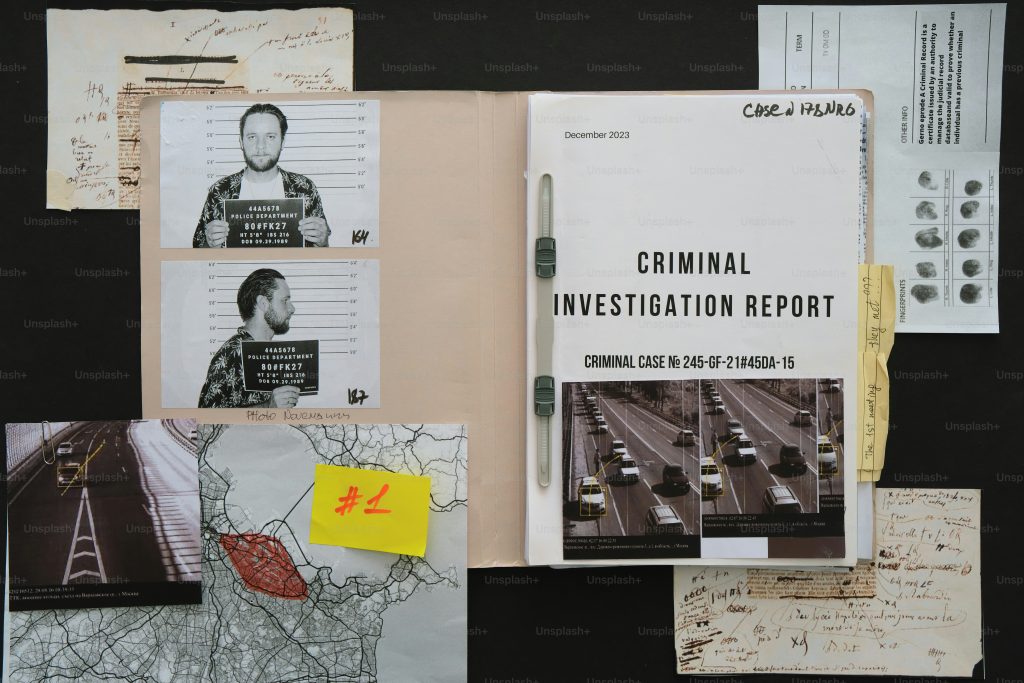
In a recent court ruling on a fatal shooting incident of February 2024 in Cleveland, USA, a judge in Ohio court excluded the facial recognition evidence. After failing to secure leads, the investigators had turned to surveillance footage taken days after the crime. An AI facial recognition software was used to identify a suspect. While the police successfully arrested the suspect and found additional evidence like firearms, the court denied the permissibility of the AI evidence because the police had not independently corroborated the suspect’s identity before executing search warrant. They had also failed to disclose the use of facial recognition in their affidavit. Fortunately for the investigators, they had additional evidence that proved the crime even though there were lapses in the nitty-gritty of legal procedures. The judge’s action and the investigators’ steps in this case highlights how AI is transforming criminal investigation.
AI’s super human capabilities
With the widespread availability and accessibility of AI softwares, investigators across the world are experimenting with AI tools while attempting to crack difficult cases. In most parts of the world, AI is still considered a nascent technology and limited reliance is placed on it. AI assisted investigations are like an extra-tool playing an empowering role and guiding the investigation to obtain corroborative evidence. In the case of the Ohio court, the judge wasn’t rejecting the utilization of AI altogether. It was the possibility of wrongful arrests, worries of detention of innocent people etc. that forces courts to consider AI evidence. Using AI to arrest suspects without independent verification before the execution of a search warrant will make the legal process tyrannical. Morever, judges will hesitate to defy legal precedents when AI is the sole medium to obtain damning proof on a high-profile crime. Unless the police can provide credible alternate evidence apart from AI-driven conjectures, the case won’t stand the rigorous test of the legal system.
AI tools like facial recognition are in great demand among investigators. AI can repair blur footage captured in security cameras. AI that can detect threat, uncover disguise and red flag suspicious behaviors can help police and investigating agencies save valuable time. Instead of tiresome process of going through hours of video or audio, AI can speed up sensitive investigations where time is of paramount importance. AI can help avoid common human biases and prejudices from influencing the investigation process. AI can conduct several detective activities like reading thousands of text messages, analyzing mobile tower locations, evaluating witness testimonials for inconsistencies and narrowing down or expanding the list of suspects. AI can detect false-flags like deepfakes so that only authentic digital evidence is produced in the court of law. AI is a powerful tool that can revolutionize criminal investigation by reducing the stress on limited manpower.
Despite the perceived use-cases, the AI usage in investigation can at best be that of usage based on cautious optimism. AI applications are still learning by consuming loads of inputs and it’s not perfect enough to act as the sole evidence on which individuals can be arrested. AI models differ in quality and the output are sometimes incorrect. Moreover, governments across the world haven’t yet formulated legal frameworks and legislations on the permissibility, appropriateness and legal status of the AI-based evidence.
Conclusion
While AI tools like reasoning models, deepfake detection algorithms and facial recognition softwares provides fresh impetus to the vital task of investigation, persistent use of AI also brings in a new set of challenges. Overreliance on AI for routine reasoning activities saps the dynamism required to solve complex criminal cases. AI cannot replace human intuitive ability and experience on the ground. If the data that AI consumes is biased, it can lead to unjust outcomes for the investigative process and frame innocent citizens as suspects of heinous crimes. AI doesn’t enjoy legal sanctity till the government and legislative process determines which AI tools can be used and creates a set of standards, protocols and SOPs for fair use. AI can go beyond the human limits of investigating officers but AI has it’s own limitations and biases that unintentionally creep up in the language learning model. Until the AI models are fine-tuned and customized to the requirements of local laws and standardized for acceptable use, the criminal investigation process may be tweaked but would never be completely transformed.